I Switched to the Wacaco Pixapresso and Here is What Happened
Introduction
Portable espresso makers have quietly moved from novelty to legitimate daily-driver gear. The appeal is obvious: people want better coffee away from home without depending on office pod machines, gas-station coffee, or inconsistent café options during travel. In that landscape, the Wacaco Pixapresso has drawn attention as a compact, hand-powered espresso solution aimed at buyers who care about taste consistency, durability, cleanup time, and how realistic “espresso” is without electricity.
This article follows a common real-world scenario: someone who already has a routine—maybe a home espresso machine, an AeroPress, a moka pot, or café reliance—and decides to switch to the Pixapresso for day-to-day convenience. The results are not framed as hype or a miracle transformation. Instead, they’re the kind of practical outcomes buyers typically care about: whether it actually fits the commute, whether the workflow is easy enough to repeat every morning, what compromises show up after a few weeks, and whether the coffee is “espresso-like” in a way that satisfies.
What the Wacaco Pixapresso Is (and Who It’s For)
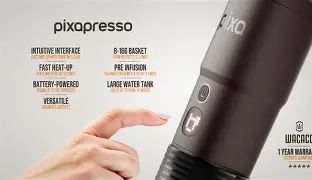
The Wacaco Pixapresso is a manual portable espresso maker. It is designed to pull a concentrated coffee shot by using human-powered pressure rather than an electric pump. That means it targets a specific kind of user:
- Commuters who want a predictable shot at the office without relying on shared equipment.
- Frequent travelers who want a compact setup for hotels, road trips, and airports (where permitted).
- Outdoor and camping users who can heat water but don’t want a full brewer and accessories.
- Minimalist home users who want espresso-style drinks without dedicating counter space to a machine.
It is less ideal for people who want to make multiple milk drinks back-to-back for a household, or for those who dislike hands-on processes. Manual espresso devices reward attention: water temperature, grind, dose, tamping, and preheating matter more than many newcomers expect.
Switching to the Pixapresso: What Changed in Daily Use
When someone “switches” to a portable espresso maker, the biggest change is not taste—it’s workflow. Most buyers underestimate how much their existing setup automates: an espresso machine stabilizes temperature, provides consistent pressure, and often has a built-in steamer. A pour-over or AeroPress routine might be slower, but it’s forgiving. The Pixapresso sits in a different middle ground: it can produce a small, punchy coffee with crema-like texture, but it asks the user to manage variables deliberately.
Morning routine and time-to-cup
In typical daily use, time-to-cup is driven by three steps: heating water, preheating the device, and pulling the shot. If a user already has access to a kettle (home or office), the Pixapresso portion can be quick. The friction appears when hot water is not immediately available. At home, adding “heat water” may not change the total time. At work or on the road, it can be the deciding factor between using the Pixapresso daily and using it occasionally.
For many switchers, the Pixapresso becomes a planned ritual rather than an automatic button press. The payoff is a more café-like concentrate than most portable brewers, but the routine is only sustainable if the user enjoys—or at least tolerates—hands-on preparation.
Consistency: better than expected, but not effortless
In practice, the Pixapresso tends to be consistent once a user “locks in” a recipe: the same coffee, grind setting, dose, and water temperature. But it is less forgiving than immersion brewing. If the grind is slightly off or the coffee is stale, the outcome is more obvious: sour under-extraction, bitter over-extraction, or thin body. Many people switching from pods or office machines are surprised by how much freshness and grind quality matter when the device doesn’t compensate with high heat stability or a powered pump profile.
Portability: the real win (with a caveat)
The portability advantages are tangible: it can travel in a bag and produce espresso-like coffee almost anywhere with hot water access. The caveat is that “portable espresso” is not just one device. It’s an ecosystem of small items: coffee, grinder (if using whole beans), a way to heat water, and something to catch drips and manage cleanup. People who adopt the Pixapresso successfully often embrace a compact kit approach rather than treating it as a standalone solution.
Detailed Product Review and Analysis
Build quality and durability
Buyers of portable electronics and devices tend to care about durability because travel gear is handled roughly. The Pixapresso’s value proposition improves if it feels sturdy, seals reliably, and can be disassembled without fragile parts. In typical use, durability is judged by:
- Seal integrity (no leaking under pressure).
- Threading quality (parts screw in smoothly without cross-threading).
- Wear on gaskets over repeated cycles.
- Resistance to knocks in a bag.
Switchers often report that the unit feels more “tool-like” than “toy-like,” and that is important because manual espresso requires pressure and repetitive force. A portable espresso maker that creaks, flexes, or leaks quickly becomes frustrating. The Pixapresso is typically treated as a semi-precision device: sturdy enough for regular use, but still something users prefer to keep in a protective spot rather than loose with keys and chargers.
Ergonomics: pumping and comfort
Manual pressure is the defining feature—and the defining tradeoff. Ergonomics matter because discomfort turns a novelty into a drawer item. In practice, the pumping action is manageable for a single shot and often becomes intuitive after a few days. The key user experience factors are:
- Grip stability while pumping (especially when hands are wet or cold).
- Effort required to reach adequate extraction pressure.
- Control over the flow rate (slow, steady pumping usually yields better extraction).
For many switchers, this is the moment of truth: the Pixapresso feels empowering when it’s smooth and predictable, and it feels annoying when it’s finicky. Those who enjoy dialing in coffee often find the manual process satisfying. Those who want a purely effortless caffeine delivery may not.
Shot quality: what “espresso-like” looks like here
Most buyers care about three sensory outcomes: strength, texture/body, and flavor clarity. The Pixapresso can deliver a concentrated shot that works well in:
Discover deals on Electronics — updated daily.
See Deals →- Americano-style drinks (shot + hot water).
- Iced espresso drinks (shot over ice, optionally with milk).
- Simple milk-based drinks (shot + warmed milk, or cold milk for an iced latte-style drink).
In many real-world routines, it replaces café espresso for convenience, not because it’s indistinguishable from a prosumer machine. Compared with countertop espresso, the Pixapresso’s cup quality depends more heavily on preheating and the grinder. If water is too cool, the shot can taste sour and thin. If the grind is uneven, channeling or inconsistent flow can flatten sweetness.
When used with fresh beans and a capable grinder, the Pixapresso typically produces a satisfying concentrate with crema-like foam and a strong aroma. It often outperforms pod-based “espresso” in freshness and customization, while falling short of the thermal stability and repeatability of a temperature-controlled electric machine.
Temperature management and preheating
Temperature is one of the most important but least glamorous aspects of portable espresso. Manual devices are smaller and lose heat quickly. Users who switch successfully tend to adopt a simple habit: preheat the brewing chamber and cup. In daily use, this can mean rinsing the unit with hot water or letting it warm while the kettle reaches temperature.
Skipping preheating is one of the most common causes of disappointment. The coffee can still be strong, but it may taste sharp or underdeveloped. This becomes especially noticeable with lighter roasts, which are more demanding. For medium roasts, many people find it easier to get a balanced shot even when conditions are less ideal.
Basket size, dosing, and practical yield
Buyers generally want to know, “Will this replace my normal espresso?” The honest answer depends on dosage preferences and drink style. Many portable espresso setups are best for single-shot-style servings, not large café doubles. That means it can feel perfect for a mid-morning pick-me-up but less ideal for someone who drinks big milk beverages that typically start with double shots.
In real use, the Pixapresso tends to shine when the user embraces its strengths: a compact, repeatable concentrate for one person at a time. If a household needs three lattes every morning, a manual portable espresso maker becomes a bottleneck.
Cleaning, maintenance, and long-term usability
Portable devices win when cleanup is fast. The Pixapresso generally supports a quick routine: knock out the puck (or rinse it out), rinse parts, and let them air dry. Maintenance is less about electronics and more about keeping seals clean and preventing coffee oils from building up. What buyers care about over time:
- Whether it’s easy to rinse in a small sink (office restrooms, hotel bathrooms).
- Whether coffee grounds get trapped in threads or crevices.
- Whether gaskets are easy to inspect and keep clean.
Long-term satisfaction typically correlates with how painless cleanup feels on tired mornings. If the user’s environment makes cleaning awkward (no sink access, limited water), usage frequency often drops.
Pros & Cons
Pros
- True portability for espresso-style coffee with no electricity required for brewing.
- Control over variables (dose, grind, water ratio), which helps users tailor flavor.
- Great for travel and office use when hot water is available.
- Often produces a richer concentrate than many pod or instant “espresso” alternatives.
- Compact footprint compared with any countertop espresso setup.
- Fast cleanup once a user learns the disassembly routine.
Cons
- Requires hot water; the portability advantage depends on having a kettle or heat source.
- More technique-dependent than immersion brewers; grind and preheating matter.
- Manual effort can be inconvenient when making multiple drinks.
- Not a full espresso machine replacement for users who want high-volume milk drinks and maximal consistency.
- Extra gear temptation (a grinder, scale, and a better kettle can become “necessary” for best results).
Comparison Table: Pixapresso vs. Common Alternatives
A comparison helps clarify the real buying decision. Many shoppers are not choosing between Pixapresso and “nothing”—they’re choosing between Pixapresso and a portable brewer they already understand.
| Option | Power Needed | Coffee Style | Skill Required | Best For | Main Tradeoff |
|---|---|---|---|---|---|
| Wacaco Pixapresso | None for brewing (hot water required) | Espresso-style concentrate | Medium | Travel/office espresso drinks, Americanos, iced espresso | Technique + temperature management |
| Pod espresso machine | Electric | Convenience “espresso” | Low | Fast, consistent caffeine with minimal prep | Ongoing pod cost, less freshness/customization |
| AeroPress | None (hot water required) | Strong coffee / concentrate | Low to Medium | Versatile travel brewing, forgiving recipes | Not espresso texture; different mouthfeel |
| Moka pot | Stovetop heat | Strong stovetop coffee | Low | Home and camping with a burner | Less portable; can be bitter if mishandled |
| Compact home espresso machine | Electric | Espresso | Medium to High | Daily espresso + milk drinks at home | Counter space, cost, maintenance |
Real-World Use Cases: Where the Switch Makes Sense
Office coffee that isn’t depressing
One of the strongest reasons people adopt a portable espresso maker is to escape mediocre office coffee. In an office with a kettle or hot water dispenser, the Pixapresso can become a consistent daily tool. The user can store coffee at their desk (ideally in an airtight container) and pull a shot during breaks. Buyers usually care about whether it’s socially and practically acceptable in a shared space. The Pixapresso is relatively quiet, doesn’t require electricity for brewing, and doesn’t take over the breakroom—but the user will still need to rinse parts, which requires sink access and basic courtesy.
Business travel and hotel rooms
Hotels often offer coffee makers that produce thin, stale coffee. A portable espresso device can noticeably improve that experience as long as the traveler can access hot water. Many hotels provide kettles on request or have breakfast areas with hot water. The Pixapresso also pairs well with a small hand grinder and a bag of beans, creating a reliable morning routine that reduces dependence on finding a café in an unfamiliar city.
Road trips and camping
Road trips are a frequent motivation: people want café-style drinks without repeated stops. The deciding factor is the heat source. With a small camping stove or reliable hot water access, the Pixapresso can deliver a shot that turns into an Americano right at the campsite or rest area. Buyers who care about packability tend to appreciate the reduced bulk versus carrying a full brewer and a separate filter system.
Small apartments and minimalist kitchens
Some users switch because they want to reclaim counter space. A countertop espresso machine can be large and visually dominant. The Pixapresso is storable and can be paired with an electric kettle for a compact, flexible “espresso corner.” The tradeoff is convenience: a machine is faster and more consistent; the Pixapresso is smaller and simpler to store.
Find top-rated Electronics products at great prices.
Browse Now →Buying Guide: How to Decide if the Pixapresso Is the Right Choice
For electronics and small appliances, a smart buying decision comes down to matching the product to the user’s environment and expectations. Here are the key factors shoppers tend to evaluate.
1) Access to hot water
If hot water is always available (kettle at home, hot water at the office, travel kettle, or stove), the Pixapresso is far more likely to become a daily habit. If hot water access is inconsistent, it may become an “occasion” tool rather than a routine tool.
2) Grinder situation: pre-ground vs. fresh ground
Grind quality is a major driver of espresso results. A typical buyer question is whether pre-ground coffee will work. It can, but the best results usually come from coffee ground close to brewing time. Buyers who prioritize flavor and crema-like texture often pair the Pixapresso with a travel-friendly grinder. Those who prioritize simplicity can use pre-ground coffee, but should expect fewer “wow” shots and more variation.
3) Drink preferences: straight shots vs. milk drinks
The Pixapresso is best for people who enjoy:
- Americanos (portable espresso + hot water = a clean, satisfying cup)
- Iced espresso drinks (shot over ice, optionally topped with milk)
- Short milk drinks made with separately warmed milk
It is less ideal for users who want café-style steamed milk texture every day. Without a steamer, the user needs another method for warming and texturing milk, and that adds complexity.
4) Capacity needs
Many buyers underestimate how quickly “making coffee for one” becomes “making coffee for three.” If the user often serves multiple people, a manual espresso maker can feel slow and repetitive. In that situation, a larger home brewer may be the better fit, with the Pixapresso reserved for travel.
5) Tolerance for a hands-on workflow
Some people enjoy the ritual. Others want push-button convenience. The Pixapresso works best for users who don’t mind:
- Measuring or eyeballing dose consistently
- Paying attention to water temperature
- Adjusting grind settings over time
- Doing a quick rinse and dry after brewing
If the buyer wants “always the same” with minimal attention, an electric machine or pod system may be a better match.
6) What “espresso” means to the buyer
Many shoppers are really asking a taste question: “Will this feel like the espresso I buy at a café?” The Pixapresso can produce a concentrated shot that works beautifully in mixed drinks and Americanos, and it can be enjoyable as a straight shot—especially with medium roasts and proper preheating. But it does not replicate every advantage of a temperature-stable electric machine, and it does not remove the need for technique. Buyers who define espresso as a consistent café-equivalent shot on demand should keep expectations realistic.
Conclusion
Switching to the Wacaco Pixapresso tends to change coffee habits in a practical, noticeable way: it replaces uncertainty with a repeatable process that can travel. In day-to-day use, the biggest “what happened” is not a sudden leap to professional espresso quality; it’s the emergence of a dependable espresso-style option in places that usually don’t have one—offices, hotel rooms, road trips, and small kitchens where counter space is precious.
The Pixapresso is at its best when it’s treated like a compact espresso tool rather than a gadget. Buyers who care about portability, control, and a richer concentrate than typical travel coffee often find the switch worthwhile. The tradeoffs are real—hot water access, technique, and manual effort—but for the right user, those compromises feel manageable in exchange for better coffee in more places.