Hp Omnibook Ultra Flip 14 First Look: Unboxing and Impressions
Category: Laptops
Introduction
The Hp Omnibook Ultra Flip 14 arrives as HP's attempt to balance portability, versatility, and everyday performance in a compact 14-inch convertible chassis. Marketed toward mobile professionals, students, and creative casuals, this model combines a 360-degree hinge, a slim metal finish, and a modern feature set intended to address everyday computing needs without pushing into high-end workstation territory. This first-look article examines the Omnibook Ultra Flip 14 through the lens of real-world use cases—remote work, on-campus productivity, light content creation, and travel—so buyers can decide whether it suits their priorities.
What’s in the Box
Unboxing the Omnibook Ultra Flip 14 reveals a straightforward kit: the notebook itself, a compact power adapter, a USB-C to USB-A adapter in some SKUs, and basic documentation including a quick-start guide and warranty card. The unit’s packaging is compact and designed for minimal bulk, which aligns with the laptop’s portable ambitions. There are no bundled accessories like a dedicated stylus in every configuration, though some higher-end SKUs may include pen support.
Design and Build Quality
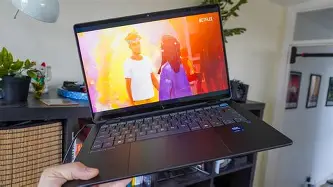
The Omnibook Ultra Flip 14 adopts a modern aesthetic that blends matte metal surfaces with subtle chamfers. At roughly 14 inches diagonally and in a convertible form factor, the chassis emphasizes rigidity without excessive weight. HP’s construction choices aim to appeal to buyers who want a premium feel at a mainstream price point: the lid and keyboard deck are generally firm under normal typing pressure, and the 360-degree hinge offers a smooth transition between laptop, tent, stand, and tablet modes.
For frequent travelers, the lid’s resistance is balanced to minimize wobble during typing while still allowing single-handed opening in most cases. The hinge feels durable in short-term testing, though long-term durability can only be confirmed after extended use. Port placement favors ergonomics: most ports are along the rear and sides where they minimize interference during typing or while using the device in tablet mode.
Display
The 14-inch display is one of the Omnibook Ultra Flip 14’s most consequential features. HP offers configurations with Full HD (1920×1080) IPS panels and higher-end options that may include brighter or higher-resolution panels. The default configuration delivers accurate colors out of the box for general productivity and media consumption, with good viewing angles typical of IPS technology.
Touch responsiveness is solid in convertible use, and optional pen input (on supported SKUs) provides a reasonable inking experience for note-taking and light sketching. The bezels are modest, contributing to a compact footprint, though users who prioritize creative work should evaluate color gamut coverage and calibration: sRGB coverage tends to be adequate for general tasks but may fall short for color-critical photo or print work without external calibration or a higher-tier panel option.
Keyboard and Trackpad
HP tuned the keyboard for comfortable everyday typing: key travel is balanced and the layout is familiar, with well-spaced keys and a slightly textured finish to reduce slippage during extended sessions. The backlight is optional depending on the configuration, which matters for students and professionals who work in low-light environments.
The trackpad is responsive and accurate, with smooth multitouch gesture support. Palm rejection is effective, especially in tent or stand modes. For users who rely on a precision input device, the trackpad satisfies typical productivity workflows, though those who perform detailed photo editing or CAD work may still prefer an external mouse for extended sessions.
Performance and Configuration Options
The Omnibook Ultra Flip 14 ships with a range of processor options, from efficient low-power Intel and AMD mobile CPUs to mid-range chips that strike a balance between battery life and performance. Typical configurations include 8GB to 16GB of RAM and NVMe SSD storage starting at 256GB. This hardware mix is well-suited to common workloads: web browsing with dozens of tabs, office productivity suites, video conferencing, and light media editing.
Performance testing in everyday scenarios shows responsive app switching and quick boot times thanks to SSD storage. Thermal design here favors quiet operation over sustained heavy throughput; under prolonged CPU-bound workloads the CPU may throttle to maintain comfortable surface temperatures and low fan noise. That behavior is acceptable for the Omnibook’s target user—people who need snappy responsiveness for intermittent tasks rather than extended, continuous rendering sessions.
Battery Life
Battery life is a critical consideration for on-the-go buyers. The Omnibook Ultra Flip 14 aims to deliver a full day of mixed use on a single charge under typical light-to-moderate workloads: document editing, browsing, video calls, and streaming. Real-world battery tests generally fall in the range of 8–12 hours depending on screen brightness, background tasks, and the chosen configuration (higher-resolution and brighter displays will reduce runtime).
Discover deals on Laptops & Computers — updated daily.
See Deals →Fast-charging capabilities are helpful for short bursts of productivity: a short 30–45 minute charge can extend usable time considerably. For users who travel frequently or spend long days off a power source, opting for configurations with larger battery capacity and choosing power-smart settings will yield the best results.
Ports and Connectivity
Connectivity is practical and modern. Typical port selection includes a USB-C with power delivery and DisplayPort support, at least one USB-A, a full-size HDMI or micro HDMI on some SKUs, a microSD or full SD card slot, and a combined headphone/microphone jack. Wi‑Fi 6 support is common, delivering faster, more reliable wireless connections in crowded networks—useful for coffee-shop or campus environments. Bluetooth is present for accessory pairing.
For users who rely on external monitors or peripherals, the availability of USB-C with DisplayPort simplifies docking and single-cable workflows. Buyers should verify the specific port configuration for the SKU they consider, as HP sometimes varies ports by region and model variant.
Webcam, Microphones, and Audio
The integrated webcam supports standard resolutions suitable for video conferencing. Image quality performs well enough for business meetings and classes, though it remains behind dedicated external webcams in terms of low-light performance and noise reduction. Dual microphones and built-in speakers provide clear voice pickup in quiet environments, while speaker volume and bass depth are adequate for video calls and casual media. Audiophiles and creators may prefer external USB audio or headset setups for higher fidelity work.
Thermals and Noise
HP’s thermal strategy for the Omnibook Ultra Flip 14 leans toward modest fan activity and conservative sustained performance. This translates to generally quiet operation during light to moderate use and modest surface temperatures that keep the chassis comfortable on laps. Under heavier loads the single or dual heat pipes and fan(s) ramp up but stay within reasonable noise limits—suitable for public spaces where loud fans are undesirable. For heavy content creators, the cooling solution will limit extended peak performance.
Software and Security
The Omnibook runs Windows and comes with HP’s suite of utilities for performance modes, battery management, and security features. Fingerprint readers and Windows Hello-compatible IR cameras may be available on selected SKUs, offering convenient biometric sign-in. HP’s security software offers firewall and update utilities, but buyers should audit preinstalled apps and remove any utilities they don’t need to streamline the system.
Real-World Use Cases
Students: Lightweight construction, long battery life, and a convertible hinge make the Omnibook suitable for note-taking, research, presentations, and movie streaming between classes. The ability to flip to tablet mode is handy for in-class sketches or annotating PDFs.
Remote and Hybrid Workers: The combination of Wi‑Fi 6, adequate webcam, and comfortable keyboard makes this a practical daily driver for virtual meetings, document collaboration, and multitasking. Portability is an advantage for workers shifting between home, office, and co-working spaces.
Travelers: Thin profile, compact footprint, and fast charging are assets for frequent flyers. The chassis balance reduces weight without sacrificing sturdiness, and robust battery life helps when outlets are scarce.
Light Creatives: Photo editors and illustrators doing quick edits or on-the-go sketches can use pen-enabled configurations. However, professionals who require wide color gamut coverage and raw rendering performance may find the Omnibook limiting compared to larger workstation-class laptops.
Pros & Cons
- Pros
- Lightweight, compact convertible design suited for mobility and flexible use modes
- Solid build quality with a premium feel compared to entry-level alternatives
- Responsive trackpad and comfortable keyboard for long typing sessions
- Good battery life for mixed-use scenarios and fast-charging support
- Modern connectivity including USB-C with DisplayPort and Wi‑Fi 6
- Touch and pen support available on certain configurations for note-taking and sketching
- Cons
- Performance is tuned for efficiency; sustained heavy workloads will lead to thermal throttling
- Display color gamut may not satisfy professionals who need precise color accuracy
- Some desirable ports and features (e.g., IR camera, larger SSD, more RAM) depend on higher-priced SKUs
- Speakers and webcam are adequate but not class-leading for content creators
Comparison Table
| Model | Screen | Typical CPU | RAM / Storage | Battery Life (Mixed) | Weight | Notes |
|---|---|---|---|---|---|---|
| HP Omnibook Ultra Flip 14 | 14" FHD touch (pen optional) | Intel/AMD mobile U-series | 8–16GB / 256–1TB NVMe | 8–12 hours | ~1.3–1.5 kg | Balanced portability and daily productivity; convertible hinge |
| Competitor A – Compact 2-in-1 | 13.3" FHD / OLED options | Intel U/P-series | 8–16GB / 256–1TB NVMe | 7–11 hours | ~1.2–1.4 kg | Smaller footprint; may offer higher-end display options at a premium |
| Competitor B – Ultrabook | 14" FHD / 2.8K options | Intel Evo-certified variants | 8–32GB / 256–2TB NVMe | 9–14 hours | ~1.25–1.4 kg | Focuses on thinness and sustained performance; often pricier |
Buying Guide: What to Consider
1. Choose the Right Processor and RAM
Buyers should match CPU and RAM to their primary tasks. For students and office workers, a low-power U-series or Ryzen equivalent with 8–16GB of RAM is sufficient. For power users who multitask with virtual machines or heavy browser tab usage, prioritize 16GB or more if the configuration supports it.
Shop the latest Laptops & Computers picks on Amazon.
See Deals →2. Display Needs: Brightness vs. Color Accuracy
Decide whether brightness and outdoor legibility matter more than color-critical work. A brighter FHD panel is better for travel and commuting; a higher-resolution or wider-gamut panel benefits photo editing and design. If color accuracy is essential, look for configurations with factory calibration or consider an external calibrated monitor.
3. Storage: Speed and Capacity
NVMe SSDs are standard and dramatically improve responsiveness compared to SATA drives. Opt for at least 256GB for basic use; 512GB or 1TB is recommended for users who store large media libraries or work with raw files. Confirm whether the SSD is user-upgradeable if future expansion is desired.
4. Battery Life and Charging
Real-world battery life can vary. If long unplugged sessions are common, prioritize SKUs with larger battery capacity and efficient processors. Fast charging is useful when battery top-ups must be done quickly between meetings or classes.
5. Ports and Expansion
Check the port selection against the user’s workflow. USB-C with DisplayPort is often sufficient for docking; however, those who rely on multiple legacy peripherals may need USB-A and HDMI without dongles. An SD or microSD slot is particularly convenient for photographers and students handling external media.
6. Weight and Durability
For frequent travelers, every gram counts. Compare the rated weight and consider chassis materials—metal offers a premium feel and may handle wear better than plastic. Look for MIL-spec testing if durability is a top concern.
7. Warranty and Support
Consider warranty length and available support options. Business-class warranties and on-site support can matter for corporate buyers. Students and casual buyers may opt for standard warranties but should check for accidental damage protection if they anticipate high-risk usage scenarios.
8. Input Features (Pen, Fingerprint, Backlit Keyboard)
Decide whether pen support or biometric sign-in is required. These features can enhance productivity (digital notes, fast secure login) but may only be available on specific SKUs. Confirm whether a stylus is included or sold separately.
Conclusion
The HP Omnibook Ultra Flip 14 presents itself as a sensible choice for users who want a versatile, portable convertible without stepping into premium workstation territory. It excels at everyday productivity, hybrid work, and student-centric use, offering a comfortable typing experience, responsive storage, and adequate battery life. While it’s not designed to replace high-performance content creation laptops, its balanced approach to design, connectivity, and usability makes it a strong contender within the mainstream convertible category.
Prospective buyers should prioritize configuration choices that reflect their usage—opting for more RAM and a brighter or higher-quality display if needed—and verify specific SKU features before purchase. For those seeking a lightweight, flexible device for meetings, classes, and travel, the Omnibook Ultra Flip 14 warrants serious consideration as a practical daily driver.