Head-to-Head: Terramaster D1 Ssd Enclosure vs Asus Tuf Gaming A16 2025 (Detailed Comparison)
Introduction
When shoppers research laptops and storage solutions, they often consider two different but related questions: how to get a portable, powerful machine, and how to manage, expand, and protect the data that powers it. The Terramaster D1 SSD enclosure and the Asus TUF Gaming A16 2025 address these needs from two distinct directions. One is a focused external storage accessory aimed at fast, flexible storage expansion and backup. The other is a full-featured gaming laptop that pairs CPU/GPU performance with built-in storage options.
This article examines both products in practical terms: who benefits from each device, how they perform in real-world scenarios, and which buyer profiles are best served by either. The goal is to provide a clear, helpful editorial comparison that helps readers choose based on use cases such as gaming, content creation, travel, workstation use, and storage management.
Product overviews
Terramaster D1 SSD enclosure — what it is and who it’s for
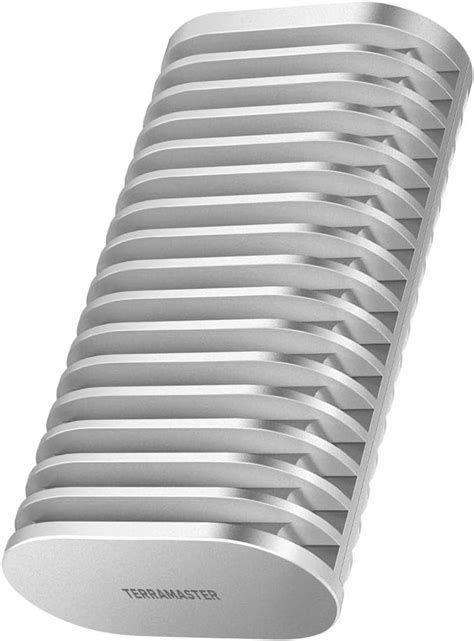
The Terramaster D1 SSD enclosure is an external storage solution designed to house a single NVMe or SATA SSD (depending on model) and expose it to a host system via a high-speed interface. It targets users who need a portable, flexible way to add fast storage to desktops, laptops, and small-form-factor devices without opening the machine or dealing with internal installation constraints.
Typical buyers include system builders who need temporary test drives, photographers and videographers who move large files between machines, and users who want an external boot or backup drive. The primary selling points are convenience, hot-swappability (in many workflow setups), and cost-effective capacity scaling by using aftermarket SSDs.
Asus TUF Gaming A16 2025 — what it is and who it’s for
The Asus TUF Gaming A16 2025 is a mainstream gaming laptop in the TUF family, designed to balance performance, durability, and price. It targets gamers, esports competitors, and mobile content creators who need a more powerful GPU and CPU than ultraportable laptops offer but prefer something lighter and more affordable than a full desktop replacement.
Buyers typically care about frame rates in modern games, thermals and sustained performance during long sessions, screen quality for gaming and editing, and real-world battery life. Upgradeability (RAM and storage), I/O options, and build quality also factor strongly into purchasing decisions for this segment.
Detailed analysis
Terramaster D1 — design, build, and connectivity
In practical use, an SSD enclosure’s value is in its reliability and the speed of its interface. The Terramaster D1 focuses on straightforward utility: a compact enclosure, tool-free or low-tool installation for single drives, and a stable, high-speed host interface (commonly USB Type-C with support for UASP or a similarly capable protocol).
Real-world notes:
- File transfers: Photographers and video editors will appreciate large sequential transfer rates for moving image sequences and video files. The enclosure is useful for shuttle transfers between on-location machines and home systems.
- Platform compatibility: It typically works across Windows, macOS, and many Linux distros without special drivers, which is important for professionals who work across platforms.
- Thermals: NVMe SSDs can heat up under sustained transfer or when used as an external scratch disk. Users should consider passive cooling behavior—metal-bodied enclosures dissipate heat better than plastic ones.
Terramaster D1 — performance and reliability considerations
Performance depends heavily on the SSD installed. An enclosure provides the link; a high-end NVMe drive provides the throughput. For most users, the enclosure will be limited by its interface—USB 3.2 Gen 2 (10 Gbps) vs. Thunderbolt 4 (40 Gbps) makes a measurable difference for sequential workloads. Latency-sensitive tasks (like running VMs, editing directly from the drive, or running databases) benefit from lower-latency interfaces.
Reliability is mostly about the enclosure's mechanical fit, connector quality, and firmware stability. For mission-critical backups, redundancy strategies (RAID or multiple copies) remain important; a single external SSD should not be the only copy of important data.
Shop the latest Laptops & Computers picks on Amazon.
See Deals →Asus TUF Gaming A16 2025 — design, build, and thermals
The TUF line is known for a robust chassis and gamer-focused aesthetics. The A16 aims to deliver a tough build quality with military-inspired testing and reinforced hinges, while keeping weight and dimensions reasonable for a 16-inch laptop. Typical buyer concerns in this area include keyboard comfort (for long sessions), screen backlight uniformity, and the noise/thermal balance under load.
Real-world notes:
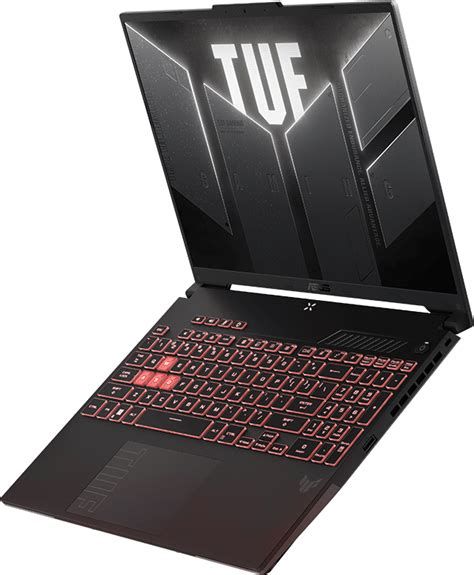
- Thermals under sustained gaming: The A16 must manage CPU and GPU heat efficiently; poor thermal design can throttle performance in long sessions or while streaming and gaming simultaneously.
- Keyboard and trackpad: Comfort and responsiveness matter for both gaming and productivity. Tactile feedback, key travel, and layout influence buying decisions.
- Portability: While heavier than ultrabooks, the A16’s 16-inch panel offers better immersion and multitasking space, which many content creators prefer.
Asus TUF Gaming A16 2025 — performance and upgradeability
The A16 is typically configurable with mid-to-upper-range laptop CPUs and dedicated GPUs aimed at 1080p to 1440p gaming. Buyers focus on sustained frame rates, the display’s refresh rate and color accuracy, and the ability to upgrade RAM and storage later. Dual-storage slots and accessible SO-DIMM sockets are significant advantages for users who want to extend the laptop’s lifespan by adding more RAM or a larger SSD.
In practical use, gamers and creators will consider the out-of-the-box storage: a fast NVMe drive enables quick game load times and smoother editing workflows. For long-term value, an easily upgradable internals design reduces future refresh costs.
Pros & cons
Terramaster D1 SSD Enclosure — pros & cons
- Pros:
- Portable and compact—easy to carry in camera bags or laptop backpacks.
- Enables affordable storage expansion using user-selected SSDs.
- Platform-agnostic—works across Windows, macOS, and Linux without driver headaches in most setups.
- Useful for fast, direct file transfers and backups when paired with a high-performance SSD.
- Cons:
- Performance limited by enclosure interface; not all models support the highest NVMe speeds.
- Heat buildup can reduce sustained performance if passive cooling is insufficient.
- Single-bay enclosures offer no redundancy—drive failure risks remain.
Asus TUF Gaming A16 2025 — pros & cons
- Pros:
- Balanced gaming performance with a focus on durability and value.
- Large 16-inch screen ideal for immersive gaming and content creation.
- Often configurable and upgradeable—RAM and storage upgrades extend usable life.
- Robust port selection for external displays, wired networking, and peripherals.
- Cons:
- Heavier and bulkier than ultraportables—less convenient for frequent travelers.
- Battery life can be modest during gaming or heavy workloads.
- Thermals and fan noise may be noticeable under sustained load depending on configuration.
Side-by-side comparison
The table below highlights the most relevant attributes for buyers choosing between adding an external storage enclosure and purchasing a gaming laptop. This is a functional comparison rather than a direct spec match, reflecting how each product solves different problems.
| Attribute | Terramaster D1 SSD Enclosure | Asus TUF Gaming A16 2025 |
|---|---|---|
| Product type | External storage accessory | Gaming laptop / mobile workstation |
| Primary use | Portable expansion, backups, drive cloning, media shuttling | Gaming, content creation, mobile productivity |
| Portability | Very portable—lightweight and pocketable (with laptop) | Portable for a 16" laptop but heavier than ultrabooks |
| Performance (real-world) | Dependent on drive + interface; optimized for fast sequential transfers | Sustained CPU/GPU performance; better for compute and rendering tasks |
| Upgradeability | Swap SSDs freely; supports larger capacities over time | RAM and storage often user-upgradable; internal upgrades possible |
| Thermals | Potential thermal throttling on NVMe under long transfers (depends on enclosure) | Integrated thermal design handling CPU/GPU; fan noise under load possible |
| Value proposition | Cost-effective way to add large, fast storage to any machine | All-in-one solution: compute, display, battery, and local storage |
| Typical buyer | Photographers, videographers, IT professionals, system builders | Gamers, streamers, mobile creators, students who game |
Buying guide: choosing based on needs
Instead of asking which device is strictly better, buyers should start with a clear assessment of their needs. The following checklist helps match those needs to the right product.
1. What is the primary task?
- If the main need is adding, transporting, or backing up large volumes of data, an external SSD enclosure like the Terramaster D1 is a focused, cost-effective solution.
- If the main need is gaming, editing, or running demanding applications on the go, the Asus TUF A16 2025 provides the processing and GPU horsepower required.
2. How important is portability?
- For lightweight daily carry, an SSD enclosure pairs well with a thin laptop—store media externally and keep the laptop light.
- If the user needs a single-device solution that includes display, input, and compute, the TUF A16 balances power and mobility at the cost of weight.
3. Is raw storage performance the bottleneck?
- For sequential read/write workloads (large file transfers, backup), external enclosures with a fast SSD are ideal.
- For latency-sensitive tasks (live editing from disk, game asset streaming), internal NVMe inside the TUF A16 or an enclosure with a Thunderbolt interface will yield better results.
4. What about future-proofing and upgradeability?
- Enclosures let users upgrade storage independently of the host device—useful for extending the life of a laptop that has limited internal slots.
- The TUF A16’s upgradeable RAM and storage bays allow for meaningful mid-life upgrades that improve longevity.
5. Budget considerations
- Compare the cost per terabyte of buying a higher-capacity internal SSD versus an enclosure plus a drive. Enclosures can be economical when upgrading old systems without adding internal drives.
- When choosing the TUF A16, evaluate the bundled storage and whether adding a second internal drive or upgrading RAM is required to meet long-term needs.
6. Workflow and ecosystem
- For multi-device workflows (desktop + laptop + tablet), an external enclosure provides a single, portable storage pool accessible to all devices.
- If the workflow centers on a single powerful machine (laptop for travel and work), investing in a capable internal drive and sufficient RAM inside the TUF A16 minimizes external dependency.
Real-world scenarios and recommendations
To make the choice more concrete, below are several buyer personas and the recommended approach for each.
Photographer on the move
Needs: quick offload of RAW files, durability, easy interchange between laptop and desktop.
Recommendation: Terramaster D1 SSD enclosure paired with one or two high-capacity NVMe SSDs. Use the enclosure for shoots and transfer to a desktop workstation later. A rugged pouch and a backup drive are advisable.
Discover deals on Laptops & Computers — updated daily.
View Offers →Student gamer who also studies
Needs: gaming performance, reasonable battery life, and a durable daily driver.
Recommendation: Asus TUF Gaming A16 2025 — it provides gaming performance and a full keyboard experience. Consider configuring with sufficient RAM and a fast internal NVMe; use cloud or external drives for large media libraries to keep the system agile.
Content creator who edits and travels
Needs: fast storage for video editing, portability, and the ability to upgrade storage as projects grow.
Recommendation: Combine both. The TUF A16 provides on-the-road editing performance; a Terramaster D1 enclosure gives expandable scratch and archive storage. This hybrid approach separates immediate editing workloads from long-term archives.
IT professional or system builder
Needs: test drives, cloning, and flexible deployment across machines.
Recommendation: Terramaster D1 is the practical accessory. It speeds up testing and deployment without opening systems and allows for rapid drive swaps.
Conclusion
The Terramaster D1 SSD enclosure and the Asus TUF Gaming A16 2025 are complementary rather than directly competitive. The enclosure is a targeted tool for storage expansion, backup, and media shuttle workflows—portable, economical, and flexible. The TUF A16 is an integrated, mobile performance platform that handles gaming and demanding applications while offering upgrade options to extend longevity.
Buyers should choose based on primary needs: select the Terramaster D1 if the priority is scalable, portable storage that can be shared across machines; choose the Asus TUF A16 if the priority is raw compute and graphics performance in a single, transportable system. For many creators and professionals, a combined approach—pairing a powerful laptop with an external SSD enclosure—delivers the best balance of performance, capacity, and workflow flexibility.