5 Hidden Features of the Onyx Studio 8 You Must Know About
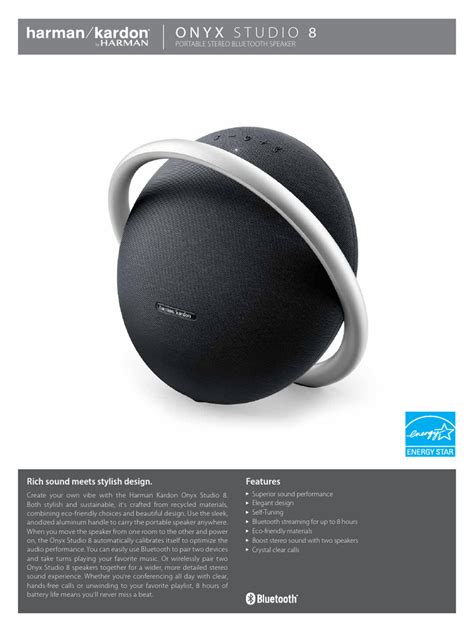
The Onyx Studio 8 has quickly become a notable option in the premium portable speaker market thanks to its design-forward aesthetic and Harman-tuned sound. Beyond the headline specs—rich midrange, tightened bass and elegant silhouette—this generation of the Onyx line includes several under-the-radar features that materially change how the speaker performs in everyday use. This article explores five lesser-known capabilities of the Onyx Studio 8, explains how they help in real-world scenarios, and provides a broader review, an honest pros & cons list, a short comparison with similar options, and a buying guide so prospective buyers can decide whether it fits their needs.
Introduction: Why these hidden features matter
When shoppers evaluate speakers, they typically compare frequency response, battery life, connectivity and brand reputation. Those checkboxes matter, but a speaker’s day-to-day usefulness is often determined by smaller conveniences: how smoothly it switches between family members’ phones, whether two units can become a real stereo pair, how firmware updates improve functionality over time, and how well the speaker handles voice calls. The Onyx Studio 8 includes a number of features that address those practical concerns. Understanding them helps buyers get full value from the purchase and avoid surprises after the unboxing.
Quick overview of the Onyx Studio 8
The Onyx Studio 8 continues the line’s focus on combining room-filling sound with sculptural design. It targets users who want premium sound for living rooms, frequent hosts who move audio between indoor and outdoor areas, and design-conscious buyers who place the speaker in plain view. At a glance, it competes with other premium portable speakers by balancing build quality, connectivity options and a user-facing companion app that unlocks additional features.
Hidden Feature 1: True wireless stereo pairing with automatic channel assignment
One feature that often surprises new owners is the Onyx Studio 8’s capability to form a true left/right stereo pair with another Onyx Studio 8. When two units are paired, the speakers automatically assign one unit to the left channel and the other to the right channel, creating a wider stereo image and clearer separation of instruments and vocals.
Real-world use case: For small gatherings or dinner parties, pairing two units placed on opposite sides of a room produces a noticeably larger soundstage than a single unit. For living-room setups where the Onyx studio is not the primary hi-fi system, it can temporarily replace a dedicated stereo pair without complex wiring or AV receivers.
Practical tip
The pairing process is typically managed through the speaker’s control surface or companion app. Once paired, the Onyx Studio 8 stores the configuration so subsequent reconnections between the same two units are largely automatic—useful when the speaker pair is moved and re-powered frequently.
Hidden Feature 2: Multi-point Bluetooth for seamless household sharing
Multi-point Bluetooth allows the Onyx Studio 8 to be connected to more than one source device simultaneously. This isn’t just a convenience gimmick: it changes how households interact with shared speakers. A phone can be finishing a call while a tablet is ready to resume music, or two housemates can switch control without repeatedly disconnecting and re-pairing devices.
Real-world use case: In family homes where different people have different playlists, multi-point capability reduces friction. One person can stream a podcast while someone else quickly takes over the speaker for a track, then hand control back without reinventing the Bluetooth pairing process.
Practical tip
Multi-point pairing is device-dependent: some older devices or OS builds may not fully support all multi-point behaviors. For the smoothest experience, keep mobile devices’ Bluetooth stacks updated and use the companion app to manage known pairings and prioritize devices.
Hidden Feature 3: App-based EQ presets, firmware updates and feature toggles
Beyond hardware, the Onyx Studio 8’s companion app exposes configuration options that the physical controls do not. Users can select EQ presets for genres (jazz, pop, movie), tweak bass/treble balance, and receive firmware updates that add stability or new features over time. These updates are not just cosmetic: firmware improvements can refine Bluetooth reliability, add codec support or improve pairing flows.
Real-world use case: A buyer who keeps their speaker in a mixed-use environment—morning podcasts, evening movies, impromptu backyard parties—can use presets to avoid repeatedly adjusting tone controls. When a firmware update adds a low-latency mode or improves multi-speaker synchronization, that single update can improve the experience across many scenarios.
Practical tip
Check the app periodically for firmware updates and read the update notes. Some updates may be small maintenance releases; others can add meaningful new functions that were not available at launch.
Looking for the best Audio & Headphones deals on Amazon?
See Deals →Hidden Feature 4: Optimized call handling and microphone features
Large portable speakers are often used for hands-free calls and video conferences, yet not every owner tries this use case initially. The Onyx Studio 8 includes microphone processing that improves call clarity: echo cancellation, noise suppression and automatic gain adjustments. Those features make it practical as a communal speakerphone during small group calls or as an auxiliary conference device for a home office.
Real-world use case: A remote team meeting with multiple people in a kitchen or home office benefits from a speaker that can pick up voices at normal conversational levels without creating distracting echoes. For buyers who alternate between music listening and remote work, this hidden capability adds versatility.
Practical tip
When using the speaker for conference calls, place it centrally on the table and avoid blocking ports or the microphone array. If the companion app offers a “call mode,” enable it for improved clarity during long meetings.
Hidden Feature 5: Advanced codec and connection fallback behavior
While the basics of Bluetooth are well-known, the Onyx Studio 8 handles connection transitions intelligently: when a high-quality codec is available, it prioritizes it; if the connection quality falls, it can switch to a more robust codec without dropping audio. Similarly, when there’s an unstable wireless environment, the speaker can attempt reconnection strategies that reduce interruptions.
Real-world use case: In apartments near many wireless networks or in kitchens with active appliances, sudden dropouts are frustrating during a movie or video call. The Onyx’s adaptive behavior reduces those interruptions, making it a more reliable daily driver than generic Bluetooth speakers in busy RF environments.
Practical tip
Avoid mixing too many wireless devices on the same frequencies when streaming high-bandwidth audio. If the environment is noisy, consider using wired or USB-C options (when available) for critical listening sessions.
Detailed product review and analysis
Sound quality: The Onyx Studio 8 emphasizes a warm, full-bodied midrange with enough upper-bass to give pop and electronic music a satisfying impact without overwhelming the lower frequencies. Vocals and acoustic instruments sit forward in the mix, which suits podcasts and vocal-centric playlists. The speaker retains clarity at moderate to high listening levels and responds well in rooms of typical living-room size.
Design and build: A signature of the Onyx line is its sculptural handle and rounded grille. The Studio 8’s build quality is premium—textured fabrics, soft-touch plastics and a weighted base that resists accidental tipping. The aesthetic is intended to be left in the open rather than hidden in a cabinet.
Connectivity: Bluetooth remains the primary wireless option, but the companion app and additional pairing features (stereo link, multi-point) extend the speaker’s usefulness in multi-device homes. Some buyers will miss native multiroom ecosystems or built-in voice assistants; however, the Onyx Studio 8 integrates well as an audio endpoint from phones and tablets.
Battery and portability: The Onyx Studio 8 favors sound and presence over extreme portability. It is portable enough to move from room to room or to take onto a balcony, but it is not intended as a pocketable, ultra-rugged outdoor speaker. Battery life is competitive for general use, but heavy bass content and high volume will shorten run times.
Software and updates: The companion app is a key part of the experience. It unlocks EQ control, update management and pairing settings. Buyers who value long-term support should appreciate a product that receives firmware updates, as those updates can extend the speaker’s feature set.
Shop the latest Audio & Headphones picks on Amazon.
View Offers →Pros & Cons
- Pros
- Elegant, design-forward aesthetic that fits living-room décor
- True wireless stereo pairing that produces a wide soundstage
- App-based EQ and updates add longevity and customization
- Practical multi-point Bluetooth for shared households
- Solid call handling with noise suppression and echo cancellation
- Cons
- Not as rugged or weatherproof as some outdoor-specific speakers
- No fully fledged multiroom ecosystem built into the device (depends on app and source devices)
- Advanced features are sometimes buried in the app rather than exposed on-device
- Portability trades off with size—less convenient for long travel
Comparison Table: Onyx Studio 8 and alternatives
| Model | Intended use | Key hidden features | Best for |
|---|---|---|---|
| Onyx Studio 8 | Home audio, occasional portability | Stereo pairing, multi-point Bluetooth, app EQ & firmware updates, enhanced call handling | Design-conscious buyers wanting room-filling sound and flexible household use |
| Onyx Studio 7 | Home audio, earlier generation | Stereo pairing and core Bluetooth features, fewer app-based enhancements | Buyers seeking previous-generation styling and a trusted sound signature |
| Competitor: Portable Premium Speaker | Outdoor + multiroom ecosystems | Often includes rugged IP rating, built-in voice assistant or ecosystem multiroom | Buyers prioritizing outdoor durability or integrated smart-home speaker roles |
Buying guide: How to decide if the Onyx Studio 8 is the right fit
When evaluating the Onyx Studio 8, buyers should match product strengths to their typical use cases. The following considerations focus on the things that matter most in daily life.
1. Primary listening environment
For living rooms, kitchens and home offices, the Onyx Studio 8 is a strong candidate because of its sound signature and aesthetic. If frequent outdoor use or poolside exposure is expected, choose a model with an explicit IP rating and rugged construction.
2. Multi-person households
If several people will be sharing the speaker, multi-point Bluetooth and easy switching are important. The Onyx Studio 8’s ability to remember pairings and connect multiple devices reduces friction when guests or family members take turns streaming.
3. Stereo imaging vs single-speaker convenience
Consider whether a single, more portable speaker or a pair for true stereo is more useful. If the buyer often entertains, two Onyx Studio 8s can be paired for superior imaging. If portability is prioritized, a smaller single-unit competitor may be preferable.
4. App features and software support
Some buyers value long-term firmware updates and an app that unlocks features; others prefer a simpler, button-driven speaker. If the former, verify the companion app is compatible with the buyer’s devices and that the manufacturer has a track record of timely updates.
5. Voice calls and work-from-home use
For buyers who plan to use the speaker for calls or group video meetings, evaluate microphone quality and call enhancement features. The Onyx Studio 8’s microphone processing helps in these scenarios, but buyers should test voice pickup in their typical room layout when possible.
6. Sound preference and listening habits
Those who listen primarily to vocals, podcasts and acoustic genres will appreciate the Onyx’s forward midrange. Fans of extremely deep, chest-thumping bass may want a subwoofer supplement or a different speaker tuned for low-end emphasis.
7. Budget and long-term value
Factor in how often the speaker will be used and whether the app, firmware updates and hidden features will be regularly leveraged. For an investment into a living-room centerpiece, the Onyx Studio 8’s design and update path can provide longer-term value than a cheaper, disposable alternative.
Final considerations before purchase
Prospective buyers should try to audition the speaker in a real room—ideally using music they know well—and confirm how it interacts with their existing devices. If using the speaker for work calls, test the microphone performance in the intended environment. Confirm app compatibility and review any firmware notes that address stability or added features. Finally, think about how the speaker will be used most: stationary in a living area, portable between rooms, or occasionally outside. The Onyx Studio 8 excels when it is treated as a premium, visible part of the home audio setup rather than a tool-for-everywhere.
Conclusion
The Onyx Studio 8 offers more than just attractive looks and a warm sound signature. Its hidden features—stereo pairing, multi-point Bluetooth, app-driven EQ and firmware updates, improved call handling, and adaptive connection behavior—are practical elements that change how the speaker performs in day-to-day life. For buyers who care about design, household convenience, and software-backed improvements, the Studio 8 is a compelling option. Understanding these lesser-known capabilities helps buyers maximize the speaker’s value and avoid surprises after the purchase.